
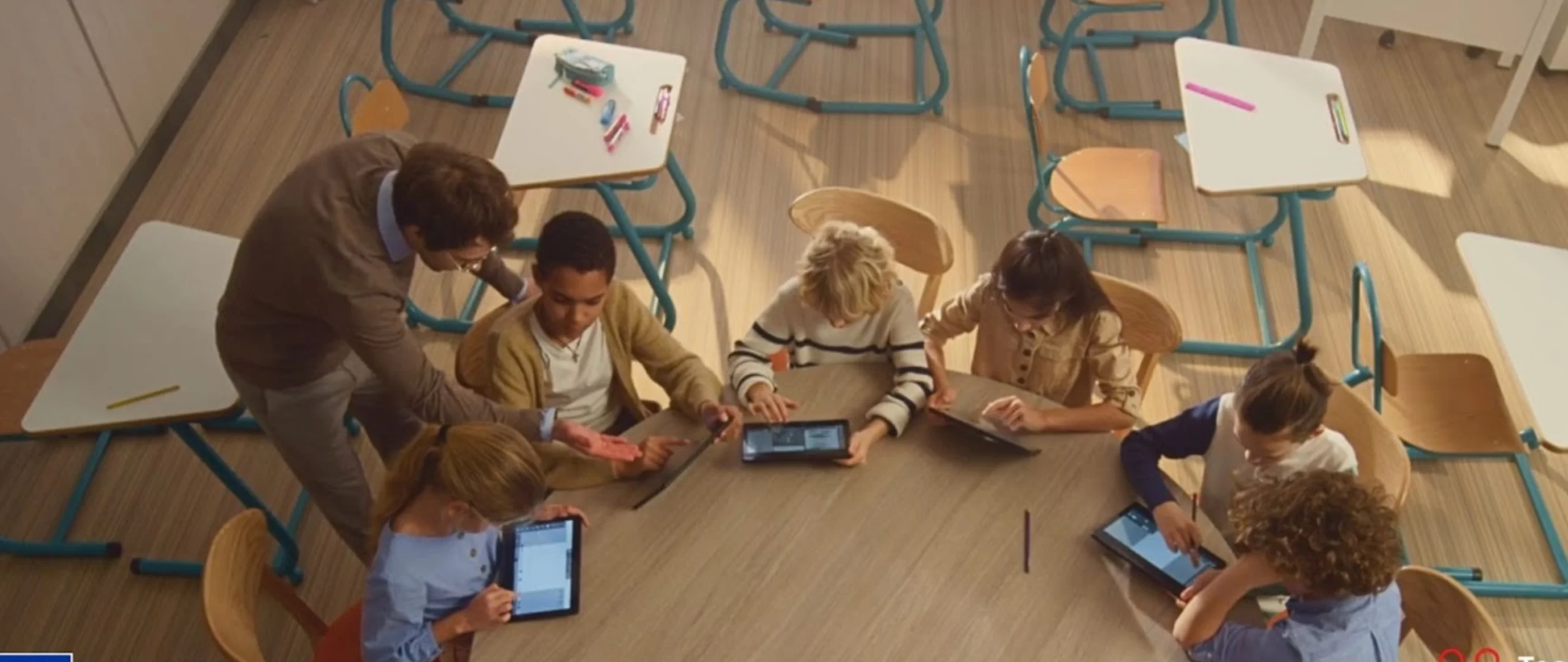
The integration of digital technology into schools – from interactive smart boards to individual student laptops and tablets – has become a global phenomenon, accelerated by recent years’ need for remote learning. While proponents celebrate the potential of digital learning tools to enhance interactivity, collaboration, and equity, a growing backlash in many countries highlights significant concerns, leading to a debate over the future of the digital classroom. Across Europe and beyond, teachers, parents, and policymakers are expressing increasing unease about the negative effects of excessive screen time on children. The core of the issue centers on distraction and its impact on academic performance.
The shift is perhaps most vividly illustrated in Finland, whose public education system is globally renowned. Pupils in the town of Riihimäki recently headed back to school with backpacks full of books after a decade of state-backed promotion of digital devices. An English teacher there noted that constant distractions led students to be “restless and too flighty to focus,” with many reportedly rushing exercises to move on to playing games and chatting on social media. Across the country, children’s learning results have been slowly eroding, prompting the government to plan new legislation to ban the use of personal devices, such as phones, during school hours.
This domestic concern is echoed globally. Data from the Organisation for Economic Co-operation and Development (OECD) reinforces these anxieties, showing that 59% of students across OECD countries reported having their attention diverted because of peers using phones, tablets, or laptops during at least some maths lessons. Critically, students who reported being distracted by peers in their maths classes scored significantly lower on maths tests. The OECD highlights the issue as a double-edged sword: devices can promote digital inclusion as well as digital literacy, but the temptation to multitask and shift attention to non-academic activities can gravely impact concentration.
International warnings are also mounting. A 2023 UNESCO report cautioned against the overuse of technology, stating that the benefits of digital tools “disappear when they’re used in excess or without the guidance of a teacher.” The agency advised that even being in the proximity of a smartphone has been linked to distraction and poorer student performance, echoing the sentiment that we must “teach children to live both with and without technology.”
Several countries and regions are responding with regulatory action. France, Finland, and Italy have already introduced bans on personal devices in the classroom. The Netherlands was set to follow in 2024. In a major move, the Madrid Regional Government in Spain announced a sweeping regulation to ban individual digital devices, including tablets and laptops, in all publicly funded early childhood and primary schools for students aged 0–12, starting in the 2025–2026 academic year.
While some countries are retreating from an “all-digital” approach, others are heavily investing in digital education, viewing it as a critical necessity for a modern education system. These efforts often focus on improving infrastructure and ensuring equitable access. In the UK, the government has invested £45 million to boost digital connectivity in schools, aiming to close the digital divide and ensure every school has the infrastructure to benefit from advances in educational technology. This strategy is based on research suggesting that when technology is used effectively, it can accelerate learning by two to five months.
Similarly, Germany is allocating approximately €1.3 billion to strengthen digital education through initiatives like the creation of a national digital education platform and improving teacher training and device infrastructure. This forms part of Germany’s broader commitment to digital transformation, far exceeding the EU’s minimum expenditure level for digital initiatives.
At the European Union level, the Digital Education Action Plan (2021-2027) outlines a long-term strategic vision for improving digital literacy, skills, and capacity. The EU recognises that making digital education a success requires comprehensive measures: providing schools with high-speed internet, equipping classrooms with hardware, training teachers, and using up-to-date curricula.
As the debate continues, international organisations emphasise that the success of digital education initiatives hinges not on the quantity of devices, but the quality and manner of their integration. Insights from the OECD and others underscore that the key factors for success are purposeful pedagogical integration – where the type of digital use matters more than the frequency – and equitable access to technology. Furthermore, strong teacher training and robust monitoring and evaluation are essential to measure the actual effects of digital tools on learning outcomes. Resources spent on technology, UNESCO suggests, should be balanced with investment in classrooms, teachers, and textbooks, particularly in low-income countries lacking basic resources.
The global experience with digital classrooms reveals a difficult truth: technology in education is a double-edged sword. On one hand, it offers immeasurable potential – expanding access and enhancing interactivity. On the other hand, its misuse or overuse risks creating new problems – distraction, anxiety, and a negative impact on academic performance.
The future of the classroom is unlikely to be an “either/or” choice between paper-and-pen and screens, but a thoughtful “both/and” approach. The challenge for educators and policymakers worldwide is to harness the undeniable potential of digital tools while simultaneously cultivating an environment of focus and engagement. Success lies in ensuring that technology serves as a powerful support for learning, but never replaces the essential human interaction and the fundamental skills developed through non-digital practice. The debate must shift from whether to use technology to how to use it effectively, appropriately, and equitably.
Related Posts



The integration of digital technology into schools – from interactive smart boards to individual student laptops and tablets – has become a global phenomenon, accelerated by recent years’ need for remote learning. While proponents celebrate the potential of digital learning tools to enhance interactivity, collaboration, and equity, a growing backlash in many countries highlights significant concerns, leading to a debate over the future of the digital classroom. Across Europe and beyond, teachers, parents, and policymakers are expressing increasing unease about the negative effects of excessive screen time on children. The core of the issue centers on distraction and its impact on academic performance.
The shift is perhaps most vividly illustrated in Finland, whose public education system is globally renowned. Pupils in the town of Riihimäki recently headed back to school with backpacks full of books after a decade of state-backed promotion of digital devices. An English teacher there noted that constant distractions led students to be “restless and too flighty to focus,” with many reportedly rushing exercises to move on to playing games and chatting on social media. Across the country, children’s learning results have been slowly eroding, prompting the government to plan new legislation to ban the use of personal devices, such as phones, during school hours.
This domestic concern is echoed globally. Data from the Organisation for Economic Co-operation and Development (OECD) reinforces these anxieties, showing that 59% of students across OECD countries reported having their attention diverted because of peers using phones, tablets, or laptops during at least some maths lessons. Critically, students who reported being distracted by peers in their maths classes scored significantly lower on maths tests. The OECD highlights the issue as a double-edged sword: devices can promote digital inclusion as well as digital literacy, but the temptation to multitask and shift attention to non-academic activities can gravely impact concentration.
International warnings are also mounting. A 2023 UNESCO report cautioned against the overuse of technology, stating that the benefits of digital tools “disappear when they’re used in excess or without the guidance of a teacher.” The agency advised that even being in the proximity of a smartphone has been linked to distraction and poorer student performance, echoing the sentiment that we must “teach children to live both with and without technology.”
Several countries and regions are responding with regulatory action. France, Finland, and Italy have already introduced bans on personal devices in the classroom. The Netherlands was set to follow in 2024. In a major move, the Madrid Regional Government in Spain announced a sweeping regulation to ban individual digital devices, including tablets and laptops, in all publicly funded early childhood and primary schools for students aged 0–12, starting in the 2025–2026 academic year.
While some countries are retreating from an “all-digital” approach, others are heavily investing in digital education, viewing it as a critical necessity for a modern education system. These efforts often focus on improving infrastructure and ensuring equitable access. In the UK, the government has invested £45 million to boost digital connectivity in schools, aiming to close the digital divide and ensure every school has the infrastructure to benefit from advances in educational technology. This strategy is based on research suggesting that when technology is used effectively, it can accelerate learning by two to five months.
Similarly, Germany is allocating approximately €1.3 billion to strengthen digital education through initiatives like the creation of a national digital education platform and improving teacher training and device infrastructure. This forms part of Germany’s broader commitment to digital transformation, far exceeding the EU’s minimum expenditure level for digital initiatives.
At the European Union level, the Digital Education Action Plan (2021-2027) outlines a long-term strategic vision for improving digital literacy, skills, and capacity. The EU recognises that making digital education a success requires comprehensive measures: providing schools with high-speed internet, equipping classrooms with hardware, training teachers, and using up-to-date curricula.
As the debate continues, international organisations emphasise that the success of digital education initiatives hinges not on the quantity of devices, but the quality and manner of their integration. Insights from the OECD and others underscore that the key factors for success are purposeful pedagogical integration – where the type of digital use matters more than the frequency – and equitable access to technology. Furthermore, strong teacher training and robust monitoring and evaluation are essential to measure the actual effects of digital tools on learning outcomes. Resources spent on technology, UNESCO suggests, should be balanced with investment in classrooms, teachers, and textbooks, particularly in low-income countries lacking basic resources.
The global experience with digital classrooms reveals a difficult truth: technology in education is a double-edged sword. On one hand, it offers immeasurable potential – expanding access and enhancing interactivity. On the other hand, its misuse or overuse risks creating new problems – distraction, anxiety, and a negative impact on academic performance.
The future of the classroom is unlikely to be an “either/or” choice between paper-and-pen and screens, but a thoughtful “both/and” approach. The challenge for educators and policymakers worldwide is to harness the undeniable potential of digital tools while simultaneously cultivating an environment of focus and engagement. Success lies in ensuring that technology serves as a powerful support for learning, but never replaces the essential human interaction and the fundamental skills developed through non-digital practice. The debate must shift from whether to use technology to how to use it effectively, appropriately, and equitably.
Related Posts
The integration of digital technology into schools – from interactive smart boards to individual student laptops and tablets – has become a global phenomenon, accelerated by recent years’ need for remote learning. While proponents celebrate the potential of digital learning tools to enhance interactivity, collaboration, and equity, a growing backlash in many countries highlights significant concerns, leading to a debate over the future of the digital classroom. Across Europe and beyond, teachers, parents, and policymakers are expressing increasing unease about the negative effects of excessive screen time on children. The core of the issue centers on distraction and its impact on academic performance.
The shift is perhaps most vividly illustrated in Finland, whose public education system is globally renowned. Pupils in the town of Riihimäki recently headed back to school with backpacks full of books after a decade of state-backed promotion of digital devices. An English teacher there noted that constant distractions led students to be “restless and too flighty to focus,” with many reportedly rushing exercises to move on to playing games and chatting on social media. Across the country, children’s learning results have been slowly eroding, prompting the government to plan new legislation to ban the use of personal devices, such as phones, during school hours.
This domestic concern is echoed globally. Data from the Organisation for Economic Co-operation and Development (OECD) reinforces these anxieties, showing that 59% of students across OECD countries reported having their attention diverted because of peers using phones, tablets, or laptops during at least some maths lessons. Critically, students who reported being distracted by peers in their maths classes scored significantly lower on maths tests. The OECD highlights the issue as a double-edged sword: devices can promote digital inclusion as well as digital literacy, but the temptation to multitask and shift attention to non-academic activities can gravely impact concentration.
International warnings are also mounting. A 2023 UNESCO report cautioned against the overuse of technology, stating that the benefits of digital tools “disappear when they’re used in excess or without the guidance of a teacher.” The agency advised that even being in the proximity of a smartphone has been linked to distraction and poorer student performance, echoing the sentiment that we must “teach children to live both with and without technology.”
Several countries and regions are responding with regulatory action. France, Finland, and Italy have already introduced bans on personal devices in the classroom. The Netherlands was set to follow in 2024. In a major move, the Madrid Regional Government in Spain announced a sweeping regulation to ban individual digital devices, including tablets and laptops, in all publicly funded early childhood and primary schools for students aged 0–12, starting in the 2025–2026 academic year.
While some countries are retreating from an “all-digital” approach, others are heavily investing in digital education, viewing it as a critical necessity for a modern education system. These efforts often focus on improving infrastructure and ensuring equitable access. In the UK, the government has invested £45 million to boost digital connectivity in schools, aiming to close the digital divide and ensure every school has the infrastructure to benefit from advances in educational technology. This strategy is based on research suggesting that when technology is used effectively, it can accelerate learning by two to five months.
Similarly, Germany is allocating approximately €1.3 billion to strengthen digital education through initiatives like the creation of a national digital education platform and improving teacher training and device infrastructure. This forms part of Germany’s broader commitment to digital transformation, far exceeding the EU’s minimum expenditure level for digital initiatives.
At the European Union level, the Digital Education Action Plan (2021-2027) outlines a long-term strategic vision for improving digital literacy, skills, and capacity. The EU recognises that making digital education a success requires comprehensive measures: providing schools with high-speed internet, equipping classrooms with hardware, training teachers, and using up-to-date curricula.
As the debate continues, international organisations emphasise that the success of digital education initiatives hinges not on the quantity of devices, but the quality and manner of their integration. Insights from the OECD and others underscore that the key factors for success are purposeful pedagogical integration – where the type of digital use matters more than the frequency – and equitable access to technology. Furthermore, strong teacher training and robust monitoring and evaluation are essential to measure the actual effects of digital tools on learning outcomes. Resources spent on technology, UNESCO suggests, should be balanced with investment in classrooms, teachers, and textbooks, particularly in low-income countries lacking basic resources.
The global experience with digital classrooms reveals a difficult truth: technology in education is a double-edged sword. On one hand, it offers immeasurable potential – expanding access and enhancing interactivity. On the other hand, its misuse or overuse risks creating new problems – distraction, anxiety, and a negative impact on academic performance.
The future of the classroom is unlikely to be an “either/or” choice between paper-and-pen and screens, but a thoughtful “both/and” approach. The challenge for educators and policymakers worldwide is to harness the undeniable potential of digital tools while simultaneously cultivating an environment of focus and engagement. Success lies in ensuring that technology serves as a powerful support for learning, but never replaces the essential human interaction and the fundamental skills developed through non-digital practice. The debate must shift from whether to use technology to how to use it effectively, appropriately, and equitably.