11/06/2026
EAVI has been actively working in recent months to guarantee that the perspectives of the media literacy community and civil society organisations are represented in the debate on the priorities of the next budget. It is a long process, implying varied advocacy activities at EU level including attendance of Committee sessions and public hearings, meetings with Members of the European Parliament, other EU officials, drafting policy papers and amendments.
To provide some context, the European Union relies on a multiannual financial framework (MFF), which is renewed every seven years. The European Commission is responsible for drafting the budget proposals, considering the outcomes of consultations as well as the opinions of the European Economic and Social Committee and of the Committee of the Regions. Member States participate through the Council of the European Union, which consists of the respective national ministers and is a co-legislator on the budget with the European Parliament. The European Parliament must give consent and may amend the MFF proposal.
Despite these procedural steps, the Council remains de facto the ultimate decision-making body, which is currently composed of EU governments with a right-wing majority.
Having said that, concerns over social media hegemonies and the rise disinformation are increasingly shared by a broad range of institutional and state actors. These include the Vatican, with the ‘Magnifica Humanitas’ Encyclical Letter highlighting AI and media literacy as an essential civic and moral duty, as well as governments seeking to strengthen their regulatory autonomy and digital sovereignty vis-à-vis major online platforms.
Discontent is also growing, with scams, children’s exposure to harmful content, social media addiction, algorithmic manipulation, threats to election integrity, AI-driven behavioural predictions, and non-EU platforms and Big Tech’s control over the content European citizens are exposed to.
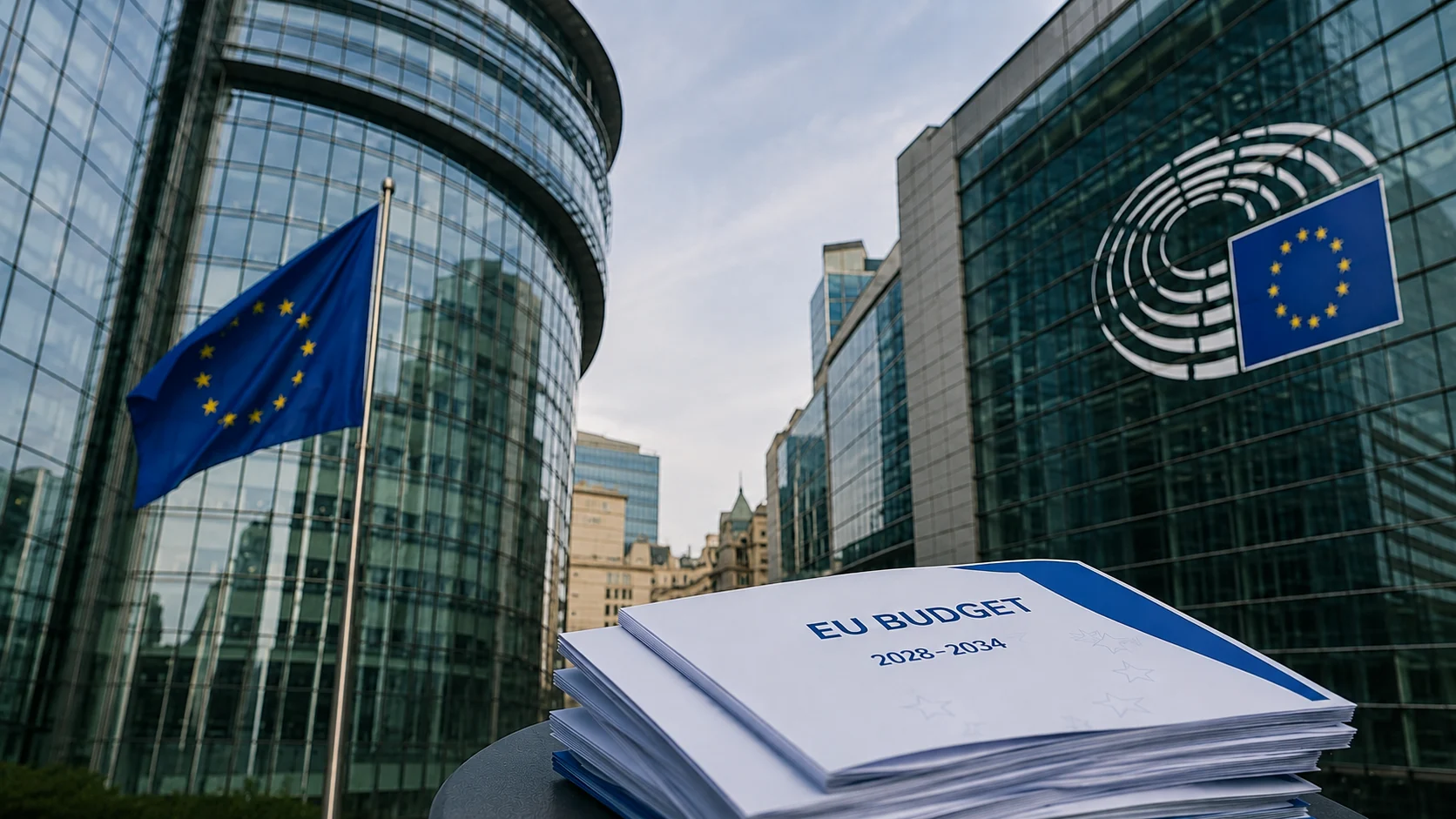
The European Commission presented a first proposal on 16 July 2025 for the multiannual financial framework 2028-2034, following the 2021-2027 budget. This proposal has a total of almost 2 trillion euros, still amounting to only 1,26% of the EU’s gross national income. The proposal mostly prioritises national and regional partnership plans (44% of the funding), competitiveness (21%), and geopolitical investments and defence (10%). The tendency is to simplify the architecture of EU funding, with the 52 current programmes merging into only 16, which aims to make it simpler for potential beneficiaries.
Funding the cultural, audiovisual, and media sectors in the MFF: the European Commission’s proposal for the AgoraEU programme
Figure 1 – Overview of programmes in the 2021-2027 MFF and the 2028-2034 MFF
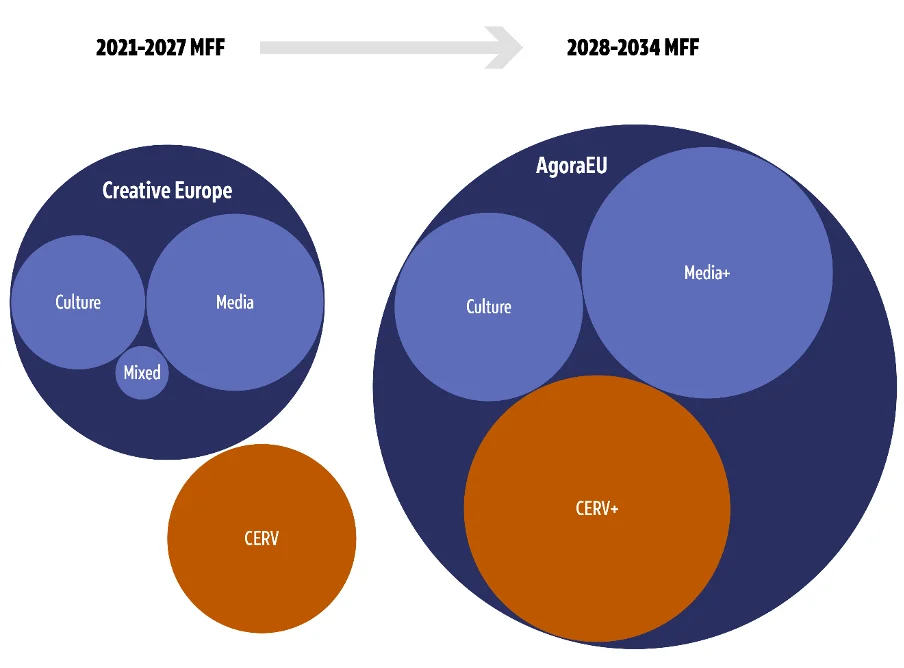
Source: European Parliament Research Service
Under the current 2021-2027 multiannual financial framework, the cultural and creative sectors, as well as the audiovisual industries, are supported through the Creative Europe programme, while the promotion and protection of rights and Union values are mainly supported through the Citizens, Equality, Rights and Values (CERV) programme, which notably provides funding to civil society organisations, including EAVI.
The European Commission proposed to bring together Creative Europe, its culture and media strands, with the CERV programme (Figure 1), within a unique programme called AgoraEU, which was also presented on 16 July 2025 with a proposed envelope of €8.582 billion for the period 2028-2034 and a promise of flexibility in funding and reduced complexity for beneficiaries. Beyond its support for culture, the audiovisual and media sector, and the promotion of EU values, the programme also aims to address growing challenges and threats posed by disinformation and foreign information manipulation and interference (FIMI). The European Commission proposal divides funding into three strands. The Creative Europe-Culture strand aims to contribute to cross-border cultural creation and cooperation, while the MEDIA+ strand aims to enhance the diversity and competitiveness of the audiovisual and video games industries, support journalism and news media. Finally, the CERV+ strand is focused on fundamental rights, equality, the fight against discrimination, democratic participation, the rule of law, and EU values.
The European Parliament’s position on AgoraEU
On 3 June 2026, Rapporteur Emma Rafowicz (S&D, France) from the Committee on Culture and Education (CULT) and Rapporteur Alice Kuhnke (Greens/EFA, Sweden) from the Committee on Civil Liberties, Justice, and Home Affairs (LIBE), presented the draft report amending the AgoraEU proposal and outlining the European Parliament’s position. The main changes include a more ambitious budget, from €8.582 billion to €10.72 billion, a reorganisation of the main strands proposed by the Commission, the inclusion of more actors, and a stronger support to civil society.
More specifically, the report calls for changes:
- to cover all sectors of the audiovisual, cultural, creative, and media spheres, fostering notably a better inclusion and funding of music, cinema, reading sectors, independent bookstores and libraries, publishing industry, free and independent press, and the video games sector;
- to support civil society organisations and their role of watchdogs through operating grants that allow them to build long-term expertise and move beyond project-based results, as well as allowing for a 100% co-funding rate in their projects to support notably small and grassroots organisations that do not benefit from external funding, and lighter administrative burdens and reporting requirements;
- to apply social conditionality in the use of funding, and apply clearer earmarking, counterbalancing the Commission’s flexible approach;
- to provide better funding to the Daphne programme and strand, increasing the resources allocated to gender mainstreaming and combatting gender-based violence;
- to recognise that supporting culture, the audiovisual and media sectors is contributing to a stronger democracy and is a matter of defence and European sovereignty.
The draft report also substantially amends the programme’s architecture, dividing the budget allocation into seven strands rather than three, thereby allowing for better earmarking and support for sectors in need. However, it increases complexity, runs counter to the European Commission’s cross-sectoral approach, and raises questions about the allocation of funding to some sectors and the reductions made to others. It is worth noting that merging Creative Europe and CERV had been considered for previous MFF, but was not adopted, and that merging separate governance structures might make it harder for Parliament’s sectoral committees to maintain specialised oversight.
The Council of the European Union’s position on AgoraEU
Member States have also recently expressed their position through the Council of the EU, which published a partial mandate on 12 May 2026. The proposal was examined by the Cultural Affairs Committee, in cooperation with members of the Audiovisual and Media Working Party and the Working Party on Fundamental Rights, Citizens’ Rights and Free Movement of Persons. Most provisions of the initial proposal were maintained, the indicative financial envelope was accepted, and the structure around three strands was retained. The partial mandate reached by the Council resulted mostly in a request to redefine the cultural and creative sectors and to clarify the roles of different sectors and the funding allocated to each. The position also called to reinforce the MEDIA+ strand, introducing a “level playing field” for the audiovisual objective, using almost identical language to that of the current Creative Europe Programme and taking into account disparities and unequal participation among Member States. The Council also placed greater emphasis on media independence and sustainability within the News objective, and included a direct reference to the European Media Freedom Act. Additions were requested for the CERV+ strand, about the promotion of Union values, but most importantly, references to combating violence against women and domestic violence, as well as tackling discrimination, and protecting children, minorities, and the rights of persons with disabilities. The Council expressed support to civil society, requesting user-friendly application and reporting procedures, and asking for particular attention to the accessibility of the Programme for organisations, including small and grassroots civil society organisations.
EAVI & media literacy in the AgoraEU programme
EAVI has informed the EU policy making process for the past 20 years, advocating at a high level to include media literacy provisions in EU legislation.
Media literacy is present throughout the European Commission’s AgoraEU proposal, transversally, but also in the “News” specific objective under the MEDIA+ strand, as subgoal (e), saying that “News” should notably focus on “promoting digital and media literacy activities in order to enable citizens, including young people, to use and develop a critical understanding of the information ecosystem”. As part of “News” and the MEDIA+ strand, media literacy appears eligible for funding.
While we appreciate this provision, and we should congratulate our community for this achievement, we believe media literacy should be established as a distinct, dedicated objective. EAVI thinks that journalism and media literacy represent in fact two sides of the communication equation: journalism focuses on the production of news, while media literacy equips citizens to receive, understand and critically evaluate that information.
Finally, it is worth noting that the European Commission proposal, the European Parliament draft report, and the Council of the EU partial mandate would benefit from the integration of a more consistent and comprehensive definition of media literacy.
EAVI’s further policy recommendations for the AgoraEU programme
Ahead of further negotiations at the European Parliament, but also of the upcoming trilogue negotiations between the European Commission, the Parliament, and the Council, EAVI urges European policymakers to consider the following recommendations and will suggest amendments accordingly:
1. EAVI urges policymakers to establish media literacy as a specific strand of the AgoraEU programme, subject to dedicated financial resources.
While the Commission has improved its recognition of media literacy, these efforts remain inadequate. Media literacy competencies are increasingly essential in contemporary societies. Europe must invest substantially in developing citizens’ abilities to navigate digital information. Democracy, sovereignty, and citizen well-being depend on this investment. Extensive research and policy analysis consistently reach the same conclusion: media literacy is a critical priority that cannot be treated as marginal. This is stressed by both national and international bodies – from the UK’s call of media literacy as a national priority and the Vatican’s warnings about platform manipulation, to the recommendations of the Council of Europe, OSCE, UNESCO, and all EU institutions.
The European Commission favours flexible funding mechanisms, but media literacy is an increasingly urgent global priority that requires dedicated, earmarked funding. Without such protection, media literacy risks being absorbed into broader initiatives and losing its distinct identity. EAVI therefore calls on the European Parliament to clearly separate media literacy from journalism funding and to establish it as a dedicated budget line.
2. EAVI calls for a bigger budget to be allocated to AgoraEU.
In the European Commission proposal, the AgoraEU programme would receive only 0.43% of the total envelope for the MFF, leaving culture, media, and civil society significantly underfunded in relation to other priorities. Given the mounting threats to democracy, including disinformation, election integrity, and the growing influence of platforms and Big Tech on public access to reliable information, culture, media, and civil society organisations are essential to address effectively these challenges. Therefore, EAVI supports the European Parliament’s call for increased funding.
3. EAVI calls for integrating a strengthened definition of media literacy.
Currently, the inconsistent use of terminology in EU legislation including digital literacy, media literacy, media information literacy, artificial intelligence literacy, media education or digital learning creates confusion for the recipients, including Member States.
Different legislative instruments emphasise certain aspects of media literacy while neglecting others. The European Media Freedom Act, for example, offers a broad definition but fails to address citizens’ active participation and engagement skills. Additionally, it focuses narrowly on technical and critical thinking competencies, overlooking the emotional and psychological factors that shape how citizens respond to and engage with media.
Media literacy in fact must encompass the individuals’ capacity to understand, interpret, and interact with media environments, as well as the knowledge, attitudes, values, behavioural, and emotional factors that shape how they perceive and engage with content, including their ability to recognise and respond to emotional triggers, biases, and vulnerabilities exploited by social media and Artificial Intelligence business models.
4. EAVI calls for supporting civil society organisations with structural funding.
AgoraEU should provide long-term structural funding to civil society organisations, which act as watchdogs for democracy and have proven to be essential players to defend values, democracy and citizenship. EAVI calls for the next MFF to attribute operating grants to non-profit bodies, small and grassroots organisations, to allow them to build long-term expertise and bring substantial results, as also encouraged by the European Parliament as well as the European Economic and Social Committee.
EAVI supports the European Parliament’s request that AgoraEU funds 100% of eligible costs for projects, allowing civil society organisations that do not have access to substantial external funding, not to be consumed by fundraising activities, administrative burdens and search for co-funding. EAVI also endorses the European Parliament’s suggestion that application and reporting procedures should not mobilise the full capacities of small organisations.
EAVI joins the European Federation of Journalists and the 100+ organisations who called to “move beyond short-term project funding towards structural and targeted investments that position the media as a critical actor within the democratic and digital infrastructure” in their joint letter.
5. EAVI suggests integrating media literacy into the reporting of all entities funded by AgoraEU, alongside other transversal issues such as gender mainstreaming and green sustainability.
As reporting requirements tied to EU funding have evolved to integrate gender mainstreaming and environmental dimensions, EAVI encourages that the universality and importance of media literacy be integrated within reporting requirements of all the initiatives funded by AgoraEU. Additionally, beneficiaries should receive information on how to take media literacy into account in the design and implementation of funded actions, and media literacy indicators should inform data collection.
6. EAVI calls for supporting public-interest non-profit organisations.
Article 3 of the proposal is currently asking to “increase the competitiveness of the cultural and creative sectors, in particular the media and audiovisual industries”.
It is also important to recognise that AgoraEU should not support the media and audiovisual sectors solely through the lens of competitiveness. Public service media, civil society organisations and other non-profit actors pursuing the general interest play a distinct role in serving citizens and strengthening democracy. The programme should therefore clearly distinguish between funding allocated to private and commercial actors and funding dedicated to public-interest and non-profit organisations. Separate financial allocations should ensure that support for public service and general-interest objectives is not subordinated to, or absorbed by, investments primarily aimed at increasing market competitiveness.
7. AgoraEU should apply the principle of subsidiarity through its funding design and support multi-stakeholder, inclusive and whole-of-society approaches.
While funding Member States is important, media literacy strategies are also implemented at European, cross-country, regional and local levels, benefitting from best practices or considering specific needs of communities. Conditionality in funding should be applied to ensure an inclusive, lifelong learning approach that covers not just youth but also other categories such as parents or the elderly, who are particularly vulnerable to disinformation, addictive design features of social media apps, and the digital divide. AgoraEU should also include social conditionality and gender mainstreaming across funded actions to tackle the different realities experienced by women and men online and the gender inequalities.
8. AgoraEU should be designed alongside other programmes and instruments.
Complementarity should be sought notably with Erasmus+, Horizon Europe, the European Competitiveness Fund, and the national regional and partnership plans (NRPPs). Synergies should also be established with the efforts achieved through the European Democracy Shield and other EU initiatives.
EAVI will continue its endeavours to inform EU policy-making processes by ensuring the representation of citizens’ interests.
References:
European Commission (2026). The 2028-2034 EU budget for a stronger Europe.
Related Posts

11/06/2026
EAVI has been actively working in recent months to guarantee that the perspectives of the media literacy community and civil society organisations are represented in the debate on the priorities of the next budget. It is a long process, implying varied advocacy activities at EU level including attendance of Committee sessions and public hearings, meetings with Members of the European Parliament, other EU officials, drafting policy papers and amendments.
To provide some context, the European Union relies on a multiannual financial framework (MFF), which is renewed every seven years. The European Commission is responsible for drafting the budget proposals, considering the outcomes of consultations as well as the opinions of the European Economic and Social Committee and of the Committee of the Regions. Member States participate through the Council of the European Union, which consists of the respective national ministers and is a co-legislator on the budget with the European Parliament. The European Parliament must give consent and may amend the MFF proposal.
Despite these procedural steps, the Council remains de facto the ultimate decision-making body, which is currently composed of EU governments with a right-wing majority.
Having said that, concerns over social media hegemonies and the rise disinformation are increasingly shared by a broad range of institutional and state actors. These include the Vatican, with the ‘Magnifica Humanitas’ Encyclical Letter highlighting AI and media literacy as an essential civic and moral duty, as well as governments seeking to strengthen their regulatory autonomy and digital sovereignty vis-à-vis major online platforms.
Discontent is also growing, with scams, children’s exposure to harmful content, social media addiction, algorithmic manipulation, threats to election integrity, AI-driven behavioural predictions, and non-EU platforms and Big Tech’s control over the content European citizens are exposed to.
The European Commission presented a first proposal on 16 July 2025 for the multiannual financial framework 2028-2034, following the 2021-2027 budget. This proposal has a total of almost 2 trillion euros, still amounting to only 1,26% of the EU’s gross national income. The proposal mostly prioritises national and regional partnership plans (44% of the funding), competitiveness (21%), and geopolitical investments and defence (10%). The tendency is to simplify the architecture of EU funding, with the 52 current programmes merging into only 16, which aims to make it simpler for potential beneficiaries.
Funding the cultural, audiovisual, and media sectors in the MFF: the European Commission’s proposal for the AgoraEU programme
Figure 1 – Overview of programmes in the 2021-2027 MFF and the 2028-2034 MFF
Source: European Parliament Research Service
Under the current 2021-2027 multiannual financial framework, the cultural and creative sectors, as well as the audiovisual industries, are supported through the Creative Europe programme, while the promotion and protection of rights and Union values are mainly supported through the Citizens, Equality, Rights and Values (CERV) programme, which notably provides funding to civil society organisations, including EAVI.
The European Commission proposed to bring together Creative Europe, its culture and media strands, with the CERV programme (Figure 1), within a unique programme called AgoraEU, which was also presented on 16 July 2025 with a proposed envelope of €8.582 billion for the period 2028-2034 and a promise of flexibility in funding and reduced complexity for beneficiaries. Beyond its support for culture, the audiovisual and media sector, and the promotion of EU values, the programme also aims to address growing challenges and threats posed by disinformation and foreign information manipulation and interference (FIMI). The European Commission proposal divides funding into three strands. The Creative Europe-Culture strand aims to contribute to cross-border cultural creation and cooperation, while the MEDIA+ strand aims to enhance the diversity and competitiveness of the audiovisual and video games industries, support journalism and news media. Finally, the CERV+ strand is focused on fundamental rights, equality, the fight against discrimination, democratic participation, the rule of law, and EU values.
The European Parliament’s position on AgoraEU
On 3 June 2026, Rapporteur Emma Rafowicz (S&D, France) from the Committee on Culture and Education (CULT) and Rapporteur Alice Kuhnke (Greens/EFA, Sweden) from the Committee on Civil Liberties, Justice, and Home Affairs (LIBE), presented the draft report amending the AgoraEU proposal and outlining the European Parliament’s position. The main changes include a more ambitious budget, from €8.582 billion to €10.72 billion, a reorganisation of the main strands proposed by the Commission, the inclusion of more actors, and a stronger support to civil society.
More specifically, the report calls for changes:
- to cover all sectors of the audiovisual, cultural, creative, and media spheres, fostering notably a better inclusion and funding of music, cinema, reading sectors, independent bookstores and libraries, publishing industry, free and independent press, and the video games sector;
- to support civil society organisations and their role of watchdogs through operating grants that allow them to build long-term expertise and move beyond project-based results, as well as allowing for a 100% co-funding rate in their projects to support notably small and grassroots organisations that do not benefit from external funding, and lighter administrative burdens and reporting requirements;
- to apply social conditionality in the use of funding, and apply clearer earmarking, counterbalancing the Commission’s flexible approach;
- to provide better funding to the Daphne programme and strand, increasing the resources allocated to gender mainstreaming and combatting gender-based violence;
- to recognise that supporting culture, the audiovisual and media sectors is contributing to a stronger democracy and is a matter of defence and European sovereignty.
The draft report also substantially amends the programme’s architecture, dividing the budget allocation into seven strands rather than three, thereby allowing for better earmarking and support for sectors in need. However, it increases complexity, runs counter to the European Commission’s cross-sectoral approach, and raises questions about the allocation of funding to some sectors and the reductions made to others. It is worth noting that merging Creative Europe and CERV had been considered for previous MFF, but was not adopted, and that merging separate governance structures might make it harder for Parliament’s sectoral committees to maintain specialised oversight.
The Council of the European Union’s position on AgoraEU
Member States have also recently expressed their position through the Council of the EU, which published a partial mandate on 12 May 2026. The proposal was examined by the Cultural Affairs Committee, in cooperation with members of the Audiovisual and Media Working Party and the Working Party on Fundamental Rights, Citizens’ Rights and Free Movement of Persons. Most provisions of the initial proposal were maintained, the indicative financial envelope was accepted, and the structure around three strands was retained. The partial mandate reached by the Council resulted mostly in a request to redefine the cultural and creative sectors and to clarify the roles of different sectors and the funding allocated to each. The position also called to reinforce the MEDIA+ strand, introducing a “level playing field” for the audiovisual objective, using almost identical language to that of the current Creative Europe Programme and taking into account disparities and unequal participation among Member States. The Council also placed greater emphasis on media independence and sustainability within the News objective, and included a direct reference to the European Media Freedom Act. Additions were requested for the CERV+ strand, about the promotion of Union values, but most importantly, references to combating violence against women and domestic violence, as well as tackling discrimination, and protecting children, minorities, and the rights of persons with disabilities. The Council expressed support to civil society, requesting user-friendly application and reporting procedures, and asking for particular attention to the accessibility of the Programme for organisations, including small and grassroots civil society organisations.
EAVI & media literacy in the AgoraEU programme
EAVI has informed the EU policy making process for the past 20 years, advocating at a high level to include media literacy provisions in EU legislation.
Media literacy is present throughout the European Commission’s AgoraEU proposal, transversally, but also in the “News” specific objective under the MEDIA+ strand, as subgoal (e), saying that “News” should notably focus on “promoting digital and media literacy activities in order to enable citizens, including young people, to use and develop a critical understanding of the information ecosystem”. As part of “News” and the MEDIA+ strand, media literacy appears eligible for funding.
While we appreciate this provision, and we should congratulate our community for this achievement, we believe media literacy should be established as a distinct, dedicated objective. EAVI thinks that journalism and media literacy represent in fact two sides of the communication equation: journalism focuses on the production of news, while media literacy equips citizens to receive, understand and critically evaluate that information.
Finally, it is worth noting that the European Commission proposal, the European Parliament draft report, and the Council of the EU partial mandate would benefit from the integration of a more consistent and comprehensive definition of media literacy.
EAVI’s further policy recommendations for the AgoraEU programme
Ahead of further negotiations at the European Parliament, but also of the upcoming trilogue negotiations between the European Commission, the Parliament, and the Council, EAVI urges European policymakers to consider the following recommendations and will suggest amendments accordingly:
1. EAVI urges policymakers to establish media literacy as a specific strand of the AgoraEU programme, subject to dedicated financial resources.
While the Commission has improved its recognition of media literacy, these efforts remain inadequate. Media literacy competencies are increasingly essential in contemporary societies. Europe must invest substantially in developing citizens’ abilities to navigate digital information. Democracy, sovereignty, and citizen well-being depend on this investment. Extensive research and policy analysis consistently reach the same conclusion: media literacy is a critical priority that cannot be treated as marginal. This is stressed by both national and international bodies – from the UK’s call of media literacy as a national priority and the Vatican’s warnings about platform manipulation, to the recommendations of the Council of Europe, OSCE, UNESCO, and all EU institutions.
The European Commission favours flexible funding mechanisms, but media literacy is an increasingly urgent global priority that requires dedicated, earmarked funding. Without such protection, media literacy risks being absorbed into broader initiatives and losing its distinct identity. EAVI therefore calls on the European Parliament to clearly separate media literacy from journalism funding and to establish it as a dedicated budget line.
2. EAVI calls for a bigger budget to be allocated to AgoraEU.
In the European Commission proposal, the AgoraEU programme would receive only 0.43% of the total envelope for the MFF, leaving culture, media, and civil society significantly underfunded in relation to other priorities. Given the mounting threats to democracy, including disinformation, election integrity, and the growing influence of platforms and Big Tech on public access to reliable information, culture, media, and civil society organisations are essential to address effectively these challenges. Therefore, EAVI supports the European Parliament’s call for increased funding.
3. EAVI calls for integrating a strengthened definition of media literacy.
Currently, the inconsistent use of terminology in EU legislation including digital literacy, media literacy, media information literacy, artificial intelligence literacy, media education or digital learning creates confusion for the recipients, including Member States.
Different legislative instruments emphasise certain aspects of media literacy while neglecting others. The European Media Freedom Act, for example, offers a broad definition but fails to address citizens’ active participation and engagement skills. Additionally, it focuses narrowly on technical and critical thinking competencies, overlooking the emotional and psychological factors that shape how citizens respond to and engage with media.
Media literacy in fact must encompass the individuals’ capacity to understand, interpret, and interact with media environments, as well as the knowledge, attitudes, values, behavioural, and emotional factors that shape how they perceive and engage with content, including their ability to recognise and respond to emotional triggers, biases, and vulnerabilities exploited by social media and Artificial Intelligence business models.
4. EAVI calls for supporting civil society organisations with structural funding.
AgoraEU should provide long-term structural funding to civil society organisations, which act as watchdogs for democracy and have proven to be essential players to defend values, democracy and citizenship. EAVI calls for the next MFF to attribute operating grants to non-profit bodies, small and grassroots organisations, to allow them to build long-term expertise and bring substantial results, as also encouraged by the European Parliament as well as the European Economic and Social Committee.
EAVI supports the European Parliament’s request that AgoraEU funds 100% of eligible costs for projects, allowing civil society organisations that do not have access to substantial external funding, not to be consumed by fundraising activities, administrative burdens and search for co-funding. EAVI also endorses the European Parliament’s suggestion that application and reporting procedures should not mobilise the full capacities of small organisations.
EAVI joins the European Federation of Journalists and the 100+ organisations who called to “move beyond short-term project funding towards structural and targeted investments that position the media as a critical actor within the democratic and digital infrastructure” in their joint letter.
5. EAVI suggests integrating media literacy into the reporting of all entities funded by AgoraEU, alongside other transversal issues such as gender mainstreaming and green sustainability.
As reporting requirements tied to EU funding have evolved to integrate gender mainstreaming and environmental dimensions, EAVI encourages that the universality and importance of media literacy be integrated within reporting requirements of all the initiatives funded by AgoraEU. Additionally, beneficiaries should receive information on how to take media literacy into account in the design and implementation of funded actions, and media literacy indicators should inform data collection.
6. EAVI calls for supporting public-interest non-profit organisations.
Article 3 of the proposal is currently asking to “increase the competitiveness of the cultural and creative sectors, in particular the media and audiovisual industries”.
It is also important to recognise that AgoraEU should not support the media and audiovisual sectors solely through the lens of competitiveness. Public service media, civil society organisations and other non-profit actors pursuing the general interest play a distinct role in serving citizens and strengthening democracy. The programme should therefore clearly distinguish between funding allocated to private and commercial actors and funding dedicated to public-interest and non-profit organisations. Separate financial allocations should ensure that support for public service and general-interest objectives is not subordinated to, or absorbed by, investments primarily aimed at increasing market competitiveness.
7. AgoraEU should apply the principle of subsidiarity through its funding design and support multi-stakeholder, inclusive and whole-of-society approaches.
While funding Member States is important, media literacy strategies are also implemented at European, cross-country, regional and local levels, benefitting from best practices or considering specific needs of communities. Conditionality in funding should be applied to ensure an inclusive, lifelong learning approach that covers not just youth but also other categories such as parents or the elderly, who are particularly vulnerable to disinformation, addictive design features of social media apps, and the digital divide. AgoraEU should also include social conditionality and gender mainstreaming across funded actions to tackle the different realities experienced by women and men online and the gender inequalities.
8. AgoraEU should be designed alongside other programmes and instruments.
Complementarity should be sought notably with Erasmus+, Horizon Europe, the European Competitiveness Fund, and the national regional and partnership plans (NRPPs). Synergies should also be established with the efforts achieved through the European Democracy Shield and other EU initiatives.
EAVI will continue its endeavours to inform EU policy-making processes by ensuring the representation of citizens’ interests.
References:
European Commission (2026). The 2028-2034 EU budget for a stronger Europe.
Related Posts
11/06/2026
EAVI has been actively working in recent months to guarantee that the perspectives of the media literacy community and civil society organisations are represented in the debate on the priorities of the next budget. It is a long process, implying varied advocacy activities at EU level including attendance of Committee sessions and public hearings, meetings with Members of the European Parliament, other EU officials, drafting policy papers and amendments.
To provide some context, the European Union relies on a multiannual financial framework (MFF), which is renewed every seven years. The European Commission is responsible for drafting the budget proposals, considering the outcomes of consultations as well as the opinions of the European Economic and Social Committee and of the Committee of the Regions. Member States participate through the Council of the European Union, which consists of the respective national ministers and is a co-legislator on the budget with the European Parliament. The European Parliament must give consent and may amend the MFF proposal.
Despite these procedural steps, the Council remains de facto the ultimate decision-making body, which is currently composed of EU governments with a right-wing majority.
Having said that, concerns over social media hegemonies and the rise disinformation are increasingly shared by a broad range of institutional and state actors. These include the Vatican, with the ‘Magnifica Humanitas’ Encyclical Letter highlighting AI and media literacy as an essential civic and moral duty, as well as governments seeking to strengthen their regulatory autonomy and digital sovereignty vis-à-vis major online platforms.
Discontent is also growing, with scams, children’s exposure to harmful content, social media addiction, algorithmic manipulation, threats to election integrity, AI-driven behavioural predictions, and non-EU platforms and Big Tech’s control over the content European citizens are exposed to.
The European Commission presented a first proposal on 16 July 2025 for the multiannual financial framework 2028-2034, following the 2021-2027 budget. This proposal has a total of almost 2 trillion euros, still amounting to only 1,26% of the EU’s gross national income. The proposal mostly prioritises national and regional partnership plans (44% of the funding), competitiveness (21%), and geopolitical investments and defence (10%). The tendency is to simplify the architecture of EU funding, with the 52 current programmes merging into only 16, which aims to make it simpler for potential beneficiaries.
Funding the cultural, audiovisual, and media sectors in the MFF: the European Commission’s proposal for the AgoraEU programme
Figure 1 – Overview of programmes in the 2021-2027 MFF and the 2028-2034 MFF
Source: European Parliament Research Service
Under the current 2021-2027 multiannual financial framework, the cultural and creative sectors, as well as the audiovisual industries, are supported through the Creative Europe programme, while the promotion and protection of rights and Union values are mainly supported through the Citizens, Equality, Rights and Values (CERV) programme, which notably provides funding to civil society organisations, including EAVI.
The European Commission proposed to bring together Creative Europe, its culture and media strands, with the CERV programme (Figure 1), within a unique programme called AgoraEU, which was also presented on 16 July 2025 with a proposed envelope of €8.582 billion for the period 2028-2034 and a promise of flexibility in funding and reduced complexity for beneficiaries. Beyond its support for culture, the audiovisual and media sector, and the promotion of EU values, the programme also aims to address growing challenges and threats posed by disinformation and foreign information manipulation and interference (FIMI). The European Commission proposal divides funding into three strands. The Creative Europe-Culture strand aims to contribute to cross-border cultural creation and cooperation, while the MEDIA+ strand aims to enhance the diversity and competitiveness of the audiovisual and video games industries, support journalism and news media. Finally, the CERV+ strand is focused on fundamental rights, equality, the fight against discrimination, democratic participation, the rule of law, and EU values.
The European Parliament’s position on AgoraEU
On 3 June 2026, Rapporteur Emma Rafowicz (S&D, France) from the Committee on Culture and Education (CULT) and Rapporteur Alice Kuhnke (Greens/EFA, Sweden) from the Committee on Civil Liberties, Justice, and Home Affairs (LIBE), presented the draft report amending the AgoraEU proposal and outlining the European Parliament’s position. The main changes include a more ambitious budget, from €8.582 billion to €10.72 billion, a reorganisation of the main strands proposed by the Commission, the inclusion of more actors, and a stronger support to civil society.
More specifically, the report calls for changes:
- to cover all sectors of the audiovisual, cultural, creative, and media spheres, fostering notably a better inclusion and funding of music, cinema, reading sectors, independent bookstores and libraries, publishing industry, free and independent press, and the video games sector;
- to support civil society organisations and their role of watchdogs through operating grants that allow them to build long-term expertise and move beyond project-based results, as well as allowing for a 100% co-funding rate in their projects to support notably small and grassroots organisations that do not benefit from external funding, and lighter administrative burdens and reporting requirements;
- to apply social conditionality in the use of funding, and apply clearer earmarking, counterbalancing the Commission’s flexible approach;
- to provide better funding to the Daphne programme and strand, increasing the resources allocated to gender mainstreaming and combatting gender-based violence;
- to recognise that supporting culture, the audiovisual and media sectors is contributing to a stronger democracy and is a matter of defence and European sovereignty.
The draft report also substantially amends the programme’s architecture, dividing the budget allocation into seven strands rather than three, thereby allowing for better earmarking and support for sectors in need. However, it increases complexity, runs counter to the European Commission’s cross-sectoral approach, and raises questions about the allocation of funding to some sectors and the reductions made to others. It is worth noting that merging Creative Europe and CERV had been considered for previous MFF, but was not adopted, and that merging separate governance structures might make it harder for Parliament’s sectoral committees to maintain specialised oversight.
The Council of the European Union’s position on AgoraEU
Member States have also recently expressed their position through the Council of the EU, which published a partial mandate on 12 May 2026. The proposal was examined by the Cultural Affairs Committee, in cooperation with members of the Audiovisual and Media Working Party and the Working Party on Fundamental Rights, Citizens’ Rights and Free Movement of Persons. Most provisions of the initial proposal were maintained, the indicative financial envelope was accepted, and the structure around three strands was retained. The partial mandate reached by the Council resulted mostly in a request to redefine the cultural and creative sectors and to clarify the roles of different sectors and the funding allocated to each. The position also called to reinforce the MEDIA+ strand, introducing a “level playing field” for the audiovisual objective, using almost identical language to that of the current Creative Europe Programme and taking into account disparities and unequal participation among Member States. The Council also placed greater emphasis on media independence and sustainability within the News objective, and included a direct reference to the European Media Freedom Act. Additions were requested for the CERV+ strand, about the promotion of Union values, but most importantly, references to combating violence against women and domestic violence, as well as tackling discrimination, and protecting children, minorities, and the rights of persons with disabilities. The Council expressed support to civil society, requesting user-friendly application and reporting procedures, and asking for particular attention to the accessibility of the Programme for organisations, including small and grassroots civil society organisations.
EAVI & media literacy in the AgoraEU programme
EAVI has informed the EU policy making process for the past 20 years, advocating at a high level to include media literacy provisions in EU legislation.
Media literacy is present throughout the European Commission’s AgoraEU proposal, transversally, but also in the “News” specific objective under the MEDIA+ strand, as subgoal (e), saying that “News” should notably focus on “promoting digital and media literacy activities in order to enable citizens, including young people, to use and develop a critical understanding of the information ecosystem”. As part of “News” and the MEDIA+ strand, media literacy appears eligible for funding.
While we appreciate this provision, and we should congratulate our community for this achievement, we believe media literacy should be established as a distinct, dedicated objective. EAVI thinks that journalism and media literacy represent in fact two sides of the communication equation: journalism focuses on the production of news, while media literacy equips citizens to receive, understand and critically evaluate that information.
Finally, it is worth noting that the European Commission proposal, the European Parliament draft report, and the Council of the EU partial mandate would benefit from the integration of a more consistent and comprehensive definition of media literacy.
EAVI’s further policy recommendations for the AgoraEU programme
Ahead of further negotiations at the European Parliament, but also of the upcoming trilogue negotiations between the European Commission, the Parliament, and the Council, EAVI urges European policymakers to consider the following recommendations and will suggest amendments accordingly:
1. EAVI urges policymakers to establish media literacy as a specific strand of the AgoraEU programme, subject to dedicated financial resources.
While the Commission has improved its recognition of media literacy, these efforts remain inadequate. Media literacy competencies are increasingly essential in contemporary societies. Europe must invest substantially in developing citizens’ abilities to navigate digital information. Democracy, sovereignty, and citizen well-being depend on this investment. Extensive research and policy analysis consistently reach the same conclusion: media literacy is a critical priority that cannot be treated as marginal. This is stressed by both national and international bodies – from the UK’s call of media literacy as a national priority and the Vatican’s warnings about platform manipulation, to the recommendations of the Council of Europe, OSCE, UNESCO, and all EU institutions.
The European Commission favours flexible funding mechanisms, but media literacy is an increasingly urgent global priority that requires dedicated, earmarked funding. Without such protection, media literacy risks being absorbed into broader initiatives and losing its distinct identity. EAVI therefore calls on the European Parliament to clearly separate media literacy from journalism funding and to establish it as a dedicated budget line.
2. EAVI calls for a bigger budget to be allocated to AgoraEU.
In the European Commission proposal, the AgoraEU programme would receive only 0.43% of the total envelope for the MFF, leaving culture, media, and civil society significantly underfunded in relation to other priorities. Given the mounting threats to democracy, including disinformation, election integrity, and the growing influence of platforms and Big Tech on public access to reliable information, culture, media, and civil society organisations are essential to address effectively these challenges. Therefore, EAVI supports the European Parliament’s call for increased funding.
3. EAVI calls for integrating a strengthened definition of media literacy.
Currently, the inconsistent use of terminology in EU legislation including digital literacy, media literacy, media information literacy, artificial intelligence literacy, media education or digital learning creates confusion for the recipients, including Member States.
Different legislative instruments emphasise certain aspects of media literacy while neglecting others. The European Media Freedom Act, for example, offers a broad definition but fails to address citizens’ active participation and engagement skills. Additionally, it focuses narrowly on technical and critical thinking competencies, overlooking the emotional and psychological factors that shape how citizens respond to and engage with media.
Media literacy in fact must encompass the individuals’ capacity to understand, interpret, and interact with media environments, as well as the knowledge, attitudes, values, behavioural, and emotional factors that shape how they perceive and engage with content, including their ability to recognise and respond to emotional triggers, biases, and vulnerabilities exploited by social media and Artificial Intelligence business models.
4. EAVI calls for supporting civil society organisations with structural funding.
AgoraEU should provide long-term structural funding to civil society organisations, which act as watchdogs for democracy and have proven to be essential players to defend values, democracy and citizenship. EAVI calls for the next MFF to attribute operating grants to non-profit bodies, small and grassroots organisations, to allow them to build long-term expertise and bring substantial results, as also encouraged by the European Parliament as well as the European Economic and Social Committee.
EAVI supports the European Parliament’s request that AgoraEU funds 100% of eligible costs for projects, allowing civil society organisations that do not have access to substantial external funding, not to be consumed by fundraising activities, administrative burdens and search for co-funding. EAVI also endorses the European Parliament’s suggestion that application and reporting procedures should not mobilise the full capacities of small organisations.
EAVI joins the European Federation of Journalists and the 100+ organisations who called to “move beyond short-term project funding towards structural and targeted investments that position the media as a critical actor within the democratic and digital infrastructure” in their joint letter.
5. EAVI suggests integrating media literacy into the reporting of all entities funded by AgoraEU, alongside other transversal issues such as gender mainstreaming and green sustainability.
As reporting requirements tied to EU funding have evolved to integrate gender mainstreaming and environmental dimensions, EAVI encourages that the universality and importance of media literacy be integrated within reporting requirements of all the initiatives funded by AgoraEU. Additionally, beneficiaries should receive information on how to take media literacy into account in the design and implementation of funded actions, and media literacy indicators should inform data collection.
6. EAVI calls for supporting public-interest non-profit organisations.
Article 3 of the proposal is currently asking to “increase the competitiveness of the cultural and creative sectors, in particular the media and audiovisual industries”.
It is also important to recognise that AgoraEU should not support the media and audiovisual sectors solely through the lens of competitiveness. Public service media, civil society organisations and other non-profit actors pursuing the general interest play a distinct role in serving citizens and strengthening democracy. The programme should therefore clearly distinguish between funding allocated to private and commercial actors and funding dedicated to public-interest and non-profit organisations. Separate financial allocations should ensure that support for public service and general-interest objectives is not subordinated to, or absorbed by, investments primarily aimed at increasing market competitiveness.
7. AgoraEU should apply the principle of subsidiarity through its funding design and support multi-stakeholder, inclusive and whole-of-society approaches.
While funding Member States is important, media literacy strategies are also implemented at European, cross-country, regional and local levels, benefitting from best practices or considering specific needs of communities. Conditionality in funding should be applied to ensure an inclusive, lifelong learning approach that covers not just youth but also other categories such as parents or the elderly, who are particularly vulnerable to disinformation, addictive design features of social media apps, and the digital divide. AgoraEU should also include social conditionality and gender mainstreaming across funded actions to tackle the different realities experienced by women and men online and the gender inequalities.
8. AgoraEU should be designed alongside other programmes and instruments.
Complementarity should be sought notably with Erasmus+, Horizon Europe, the European Competitiveness Fund, and the national regional and partnership plans (NRPPs). Synergies should also be established with the efforts achieved through the European Democracy Shield and other EU initiatives.
EAVI will continue its endeavours to inform EU policy-making processes by ensuring the representation of citizens’ interests.
References:
European Commission (2026). The 2028-2034 EU budget for a stronger Europe.