Europe is for Peace
The European Parliament’s Spring 2024 Eurobarometer survey is the latest survey conducted before the 2024 European elections. The survey was carried out by Verian (previously known as Kantar Public) between 7 February and 3 March in the 27 EU Member States. More than twenty-six thousand (26411) interviews were conducted face-to-face using CAPI (Computer Assisted Personal Interviewing). The results were weighted according to the population size of each country. Survey Findings According to the survey, there is notable interest among citizens in the upcoming European elections and an understanding of their importance in [...]

How Platforms Compete to Get our Attention?
When you log in to your social media accounts, you are constantly exposed to a flood of new information and content. Every day, you are exposed to this stream of data that is competing for your attention. Being online causes us to switch rapidly between tasks, leading to a lack of presence in the offline world. While online, our attention rapidly switches between tasks on different online activities, apps, social media and websites, and by the end of the day, you may feel drained and irritated. Although technology has brought about many improvements in [...]
The EU Policies on Digital Well-Being
Digital well-being encompasses our online safety, managing our online time, our ability to critically assess the media we consume and becoming responsible and confident digital citizens. In this regard, the European Union is actively striving to enhance the digital environment to benefit all citizens of Europe. According to The Council of the EU and the European Council’s website, “our digital life needs to be safe, easy and respectful of basic freedoms”, and the EU is focusing on various policy areas to enable a digital future for Europe. The Council of Europe also incorporated [...]
EU ARTIFICIAL INTELLIGENCE ACT: NEW RULES
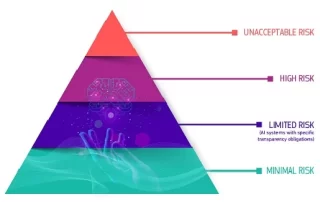
12/04/2024 Artificial intelligence is the next industrial revolution. Its proliferation and gradual improvement will profoundly change our economy and daily lives. However, as AI tools become more powerful and efficient, their potential negative impacts raise concerns among institutions and the need to regulate them. The European Union has established itself as a pioneer in governing this new field. On March 13, 2024, the European Parliament approved the Artificial Intelligence Act (AI Act), which lays the foundations for regulating the use of AI in the EU. It is the first legal framework for the [...]
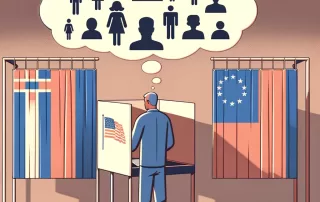
Mind the Surprising Media Mechanisms Influencing Voting Preferences
Remember the last time you went to vote. Remember how you took the ballot and entered the voting booth with the candidate you long before settled upon firmly fixed in your mind. Or did you decide right there, on the spot? Or perhaps you changed your mind in fractions of a second before the vote stamp touched the ballot? Whether your vote results from careful deliberation and well-pondered expression of your political will or arises from a spontaneous last-moment decision, our minds can sometimes trick us into making decisions we are not fully aware [...]
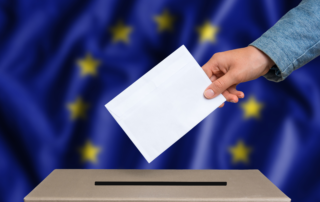
European Elections 2024
Between 6 and 9 June 2024, millions of Europeans will vote to renew the European Parliament. The European elections are a crucial moment that will determine the future direction of the European Union, as the decisions taken at the European level affect all Europeans. Free and fair elections are at the heart of every democratic system. Everyone has the right and the duty to participate and make their choice independently. However, growing disinformation, misinformation and the spread of AI deep fakes undermine public trust in the legitimacy and efficacy of democratic institutions, influencing [...]
EAVI’s Pioneering Role in Advancing Media Literacy in the EU
At EAVI, we are pleased to observe that the Communication from the Commission dated February 2023, titled “Guidelines pursuant to Article 33a(3) of the Audiovisual Media Services Directive on the scope of Member States' reports concerning measures for the promotion and development of media literacy skills”, acknowledges the studies conducted by EAVI. These studies are referred to as useful resources to assist the Member States in evaluating media literacy levels. We appreciate the recognition of our efforts in contributing to the advancement of media literacy initiatives. Indeed, media literacy is an important subject [...]
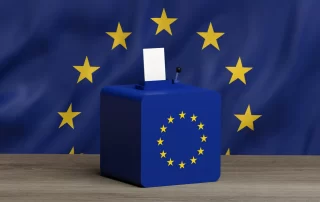
The Threat of AI-Generated Disinformation to European Elections and Democracy
In view of the elections that will be held in 2024 in the EU and other parts of the world including the US and UK, there are various challenges to democratic processes as technological advancements are on the rise. It is argued that electoral periods and times of political crisis serve as fertile ground for the production and dissemination of AI-generated content, heightening concerns about the impact on public perception and democratic processes. Recent instances have demonstrated the alarming potential of AI to enable the production of deceptive narratives, with such disinformation finding [...]

Are you aware of your Digital Footprint?
Recently, EAVI and the European Digital Learning Network (DLEARN), in collaboration with Prof. Przemek Sękalski of the Technical University of Lodz, worked together in developing an EU survey that analyses citizens awareness regarding their digital footprint. The survey aims to analyse how much control participants exercise over this digital footprint and how much control they wish they could have as well are looking at the safety aspects they would like to see in place in the future! The aim is to study the results to highlight potential areas in education and training that could be [...]

Fake news and critical literacy in the digital age: sharing responsibility and addressing challenges
How can we tackle the ongoing challenge of so-called ‘fake news’? Gianfranco Polizzi, PhD Researcher in the Department of Media at Communications at LSE, argues that we all have a responsibility to learn critical literacy to help us better to evaluate information, both on- and offline, and here sets out the responsibilities held by the different actors involved. This post was first published on the London School of Economics' Media Policy Project Blog on May 21, 2018. Social inclusion and democratic participation rely on opportunities to access, express and share information as citizens. The extent to [...]