
Beyond the Screens: Generations, Trust, and the Future of News
In the digital environment, access to information has reached unprecedented levels of speed and scale. News, comments, images, and claims can reach millions of users almost simultaneously. However, this intense circulation does not guarantee the reliability of information. On the contrary, false and misleading content can spread at the same speed and with the same visibility. This makes disinformation a structural problem rather than an individual error.For a long time, the fight against disinformation was based on individual awareness. Users were expected to check sources, question content, and think critically. While this approach was [...]

Democracy in the Age of Deepfakes: How Can We Still Trust What We See?
The rise of Artificial Intelligence (AI) has introduced a new dimension to the information landscape, enabling the creation of fabricated videos, images, and voices that convincingly imitate reality. Known as “deepfakes”, these synthetic media forms have become increasingly sophisticated and accessible, prompting concern among European policymakers and citizens alike. While they may once have appeared as online jokes or curiosity pieces, they now pose a serious threat to democratic trust across Europe. In the lead-up to elections, during conflict, or in everyday social media use, manipulated content can spread fast, eroding confidence in [...]

Teen Age-Verification on Social Media: Australian & European Approaches
Every generation faces new frontier problems. For today’s teens, the frontier is digital — a world of likes, shares, endless scrolling, and unseen pressures. With concerns mounting about mental health, attention spans, and the unseen harms of social media, Australia has taken an important step: a law banning social media access for under-16s. As that policy looms, the question for other countries is unavoidable: is this kind of ban effective or a misunderstanding of technology and young people? In November 2024, the Parliament of Australia passed a world-first law prohibiting youth in early adolescence [...]

Cyberviolence Against Women in the EU: Tools, Tactics, and Responses
Violence against women no longer exists as a phenomenon confined to the physical world. As a consequence of the rise of digital technologies, a new type of harm has developed. Cyber Violence against Women and Girls (CVAWG) represents a relatively new, but pervasive dimension of gender-based violence. From targeted harassment and deepfake abuse to non-consensual sharing of intimate images and stalking, this form of gender-based cyberviolence represents such an insidious part of cyberspace as a consequence of its invisibility, with attacks happening behind screens, anonymously, and across platforms we use daily. While digital platforms [...]
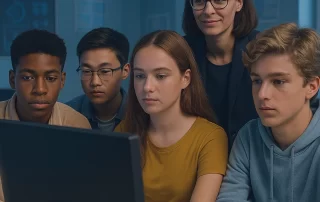
Building Digital Media Literacy Competencies in the Classroom: Becoming Digital Citizens
Over the past several years, the growing need for students to not simply consume media products and content, but also to be critical evaluators and ethical producers themselves, has been a primary focus of media literacy scholars and researchers. For this very reason, the module “Building Digital Media Literacy Competencies in the Classroom: Becoming Digital Citizens” from the Teachers 4.0 Digital Curriculum, was designed by EAVI - Media Literacy for Citizenship intending to equip learners with the indispensable toolkit to become responsible and critical digital citizens. Navigating today's digital world is becoming more complex, [...]

When Convenience Costs: AI Tools and the Decline of Critical Thinking
A recent study by the Massachusetts Institute of Technology (MIT) Media Lab on the impact of ChatGPT on the human brain, published in June 2025, has not gone unnoticed by media professionals and media consumers – and that is rightly so. MIT neuroscientists conducted a study on 54 volunteer MIT undergraduates and postdoctoral researchers (aged 18 to 39), who were required to write essays with and without the assistance of ChatGPT to assess its influence on their neural activity (Belot, 2025). In order to meet this goal, they used EEG headsets that effectively measure [...]
“Peace in the Minds” and Media Now
“Peace in the Minds” and Media Now - Speech by Prof. Tapio Varis, the President of EAVI's Advisory Board at MIL and Global Understanding Conference 2025 on 28-29 April in Barcelona. The first Director-General, Sir Julian Huxley, was asked in 1947 by young diplomats in Paris, “What does UNESCO do?” The short answer was, “It strives for peace.” (Alfredo Picasso de Oyague, International Congress on Peace in the Minds of Men, Yamoussoukro 1989, Ivory Coast). It is true that the 1945 Constitution of UNESCO explains the purpose of the organization as follows: “Collaborate in [...]
The Battle for Truth in Europe
09/04/2025 At some point, we’ve all stumbled upon a wild social media post—something along the lines of “The EU is planning to tax people for excessive breathing!” The comment section? A chaotic mix of outrage, panic, and elaborate conspiracy theories about shadowy government plots. Only when a sharp-eyed user points out that the "source" is a joke website does the uproar settle, though not before a few people announce their plans to flee to the mountains to escape the so-called tyranny. In an age where deepfakes can make politicians say things they [...]
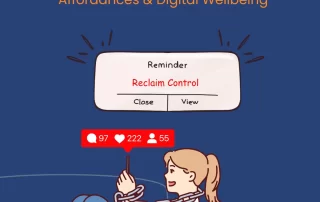
Are Your Devices Helping or Hooking You? Understanding Affordances & Digital Wellbeing
Let’s be honest—most of us have, at some point, picked up our phones to check a single notification and then resurfaced an hour later from an Instagram rabbit hole, wondering what sorcery just occurred. If this sounds familiar, congratulations! You are a victim of affordances—the invisible strings that dictate how we use technology. What Are Affordances? Affordances, a concept borrowed from design psychology, refer to the features of an object that suggest how it should be used. A door handle affords pulling, a flat plate on a door affords pushing (unless it’s one [...]
Ecomedia Literacy: Integrating Ecology into Media Literacy
Each year, the ICT sector is responsible for approximately 3.5% of global greenhouse gas emissions. This means that the digital devices we use daily, including smartphones, laptops, and data centres, release billions of tons of carbon dioxide (CO₂) into the atmosphere, contributing significantly to climate change. Production of a single smartphone generates around 85 kg of greenhouse gasses. To put that into perspective, this is roughly the same amount of emissions as driving a gasoline-powered car for 350 kilometres. Most of these emissions come from extracting raw materials and manufacturing hardware components like [...]