
When Media Is No Longer “Real”: Navigating Synthetic Content and Critical AI Literacy
The quality of content we encounter in digital media is undergoing a silent but profound transformation. Images, videos, and texts are no longer produced solely by humans; automated systems, large datasets, and generative technologies have also become part of this process. This change, while increasing the speed and volume of the media landscape, is also beginning to challenge established assumptions about how content should be evaluated.Today, the "realism" of content we encounter in the digital environment says very little about how it was produced. Technical quality, visual consistency, or language fluency are no longer [...]

Learning in the Age of AI: Why Media Literacy Matters More Than Ever
The role of digital technologies in education has long been debated. First computers, then the internet, then online platforms, and now AI-powered tools… Each new wave of technology promises to transform learning processes. However, this transformation doesn't always produce the expected results. The fundamental issue we face in education today is not whether technology exists; it is how it relates to knowledge, learning, and thinking.AI-powered systems are significantly changing how students access information. Text-generating tools, automated summaries, recommendation systems, and personalised learning platforms are speeding up both the presentation and use of information. This [...]

Beyond the Screens: Generations, Trust, and the Future of News
In the digital environment, access to information has reached unprecedented levels of speed and scale. News, comments, images, and claims can reach millions of users almost simultaneously. However, this intense circulation does not guarantee the reliability of information. On the contrary, false and misleading content can spread at the same speed and with the same visibility. This makes disinformation a structural problem rather than an individual error.For a long time, the fight against disinformation was based on individual awareness. Users were expected to check sources, question content, and think critically. While this approach was [...]

The Increasing Importance of Digital Well-Being in an Evolving Technological Environment
While digital tools make our lives easier in many aspects by providing conveniences, extensive research consistently highlights the adverse effects of their excessive usage on individuals' physical and psychological well-being. It is argued that digital media users face a growing challenge in managing the overwhelming amount of information and social interactions available to them throughout the day. The need for specific skills has risen to effectively direct digital stimuli towards personal goals, preventing issues like excessive multitasking, fragmented daily schedules, and overconsumption of new media. It is suggested that these adverse effects are [...]

Digital Well-Being: Striking a Balance in the Age of Technology
In today's hyper-connected world, digital media has become an indispensable part of our lives. From social media to news updates, from online shopping to mobile banking, technology has seamlessly integrated into our daily routines. However, this pervasiveness of digital media has raised concerns about its impact on our mental health and overall well-being. Excessive screen time, constant exposure to social media, and the pressure to maintain a digital persona can lead to various adverse effects, including anxiety, depression, sleep disturbances, and decreased focus. The constant stream of information and stimulation from digital [...]

The Threat of AI-Generated Disinformation to European Elections and Democracy
In view of the elections that will be held in 2024 in the EU and other parts of the world including the US and UK, there are various challenges to democratic processes as technological advancements are on the rise. It is argued that electoral periods and times of political crisis serve as fertile ground for the production and dissemination of AI-generated content, heightening concerns about the impact on public perception and democratic processes. Recent instances have demonstrated the alarming potential of AI to enable the production of deceptive narratives, with such disinformation finding [...]

AI Hallucination: When AI Makes Things Up
The word “hallucinate” was announced as the word of the year by the Cambridge Dictionary in 2023. It means “to seem to see, hear, feel, or smell something that does not exist, usually because of a health condition or because you have taken a drug”. The term "hallucination" originates from the Latin word "alucinari," meaning to wander in the mind. Yet, the Cambridge Dictionary added another definition for the word that signifies the emergence of a new phenomenon: “When an artificial intelligence hallucinates, it produces false information”. This indicates that AI may have [...]
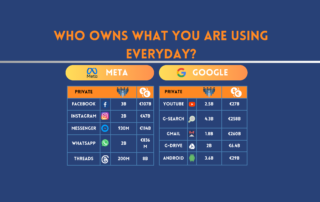
The Relevance of Chomsky’s Media Theory in Today’s Digital Landscape: Media Ownership
In an era dominated by social media and big tech giants, the concentration of media ownership has become more important than ever. The infographic above depicts the ownership landscape of major platforms and reveals an interesting truth that media control lies in the hands of a few, steering the narratives that reach billions of users worldwide. This phenomenon echoes the sentiments expressed by the famous linguist and philosopher Noam Chomsky in his ground-breaking media theory, specifically his first filter of the “Five Filters of the Mass Media,” the ownership. Chomsky’s media theory, often referred [...]

Data Literacy in the Age of Datafication: A Package to Understand How Digital Technology Treats Us
The complexity of technology, coupled with the emergence of datafication, presents new challenges for society to understand how the world works. Artificial intelligence and big data are just a few examples of the advanced technologies we have to deal with. However, both show the same trend, which is the increasingly important role of data in decision-making. Decision-making is now also automated. This process relies on technologies such as deep learning and the availability of large, real-time data to provide insight, and new knowledge to make policies. One of the easiest examples of the datafication [...]

Using Media Literacy to Fight Digital Fake News in Later Life: A Mission Impossible?
Media Literacy Training for Seniors to Fight Fake News The European Commission defines disinformation as “false or misleading content that is spread with an intention to deceive or secure economic or political gain,” whereas misinformation refers to the same kind of content shared without harmful intention, regardless of its consequences. Disinformation is commonly referred to as ‘fake news,’ and it seriously threatens the credibility of information sources and causes public harm on many layers. Media literacy training functions as a strong instrument used to combat the spread of false information by empowering citizens [...]