
Online Shopping – A Cautionary Tale in Four Letters
This week, our very own communications officer demonstrated the necessity of paying attention when ordering online. We give to you this rollercoaster of events in four emails. To: Customer Service 00.14AM 29 August 2018 Dear sir I recently ordered a package from [Retailer]. It was to be delivered by [Courier] this evening. The [Courier] parcel tracker service tells me that a delivery attempt was made this evening. However, I have been in all evening, working at my computer, at a window which faces out onto the road, in silence, and with my dog beside me. [...]

How Media Literacy and Sustainability Go Hand in Hand
Besides the tremendous heat wave we are experiencing these weeks, there are many things that encourage my reflection on climate change these days. But beyond focusing only on the disastrous consequences of decades of reckless activities harmful to our environment, I like to discover new ways in which people are creating a positive impact. How do I find about this? Well, word of mouth is of course part of it, but most movements I have discovered-- and maybe so have you-- have been from the hours I spend constantly scrolling online. Technology and digital communications [...]

The New Copyright Legislation Proposals – A Help or a Hindrance?
At the beginning of June 2018, European lawmakers rejected a proposal by the European Parliaments Committee on Legal Affairs (known as JURI) to begin negotiations to update copyright laws for the digital age. The Parliament will now review once again in September. While the debate surrounding copyright continues to unfold, let’s take a moment to look at the main arguments in this controversial debate. The right of communication to the public under Article 3(1) of the Information Society Directive has been subject to many reviews and over time it has become increasingly complex but hugely [...]

Media Literacy Tools for Senior Citizens
The following article was written by Mrs. Deena Newaz, Program Officer of World Innovation Summit for Education (WISE). Deena manages the Learners’ Voice Program at the World Innovation Summit for Education. Prior to working at WISE she was a participant on the WISE Learners’ Voice program. She has previously worked at the Ministry of Education in Qatar, the Supreme Committee for Delivery & Legacy, Georgetown University, and Qatar Foundation. Deena graduated from Georgetown University with double honors in Culture and Politics with a focus on gendered violence during wartime. She is passionate about exploring and [...]
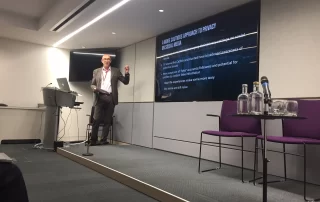
EAVI at OFCOM’s Adult Media Literacy Event
London 13 July, 2018 EAVI was lucky enough to be invited to attend UK digital watchdog, Ofcom's annual Adults' Media literacy Event in London. The event began with presentations by Jessica Rees, who explained Ofcom's adult media literacy tracker when looking at the digital divide - namely, those who are online and those who are not. The clearest indicators were those not just relating to socioeconomic group, but also age. Older respondents were more likely to not use computers for anything at all, and the reason most often cited? "It's not for people like [...]

#MeToo, You Too and the Vanity of Women
A brief look at the role of diversity and feminism in media. My childhood was spent in art galleries. Not because I’m a particularly big fan of art (I’m not), or because I am an artist (I’m really not), but because my mother is an art historian who explained the world to me through paintings and sculptures. Effectively, through the media. When I was about 11, we stood in front of a painting of a naked woman looking in the mirror, and she said to me, “This was commissioned by a man, painted by a [...]

Fake news and critical literacy in the digital age: sharing responsibility and addressing challenges
How can we tackle the ongoing challenge of so-called ‘fake news’? Gianfranco Polizzi, PhD Researcher in the Department of Media at Communications at LSE, argues that we all have a responsibility to learn critical literacy to help us better to evaluate information, both on- and offline, and here sets out the responsibilities held by the different actors involved. This post was first published on the London School of Economics' Media Policy Project Blog on May 21, 2018. Social inclusion and democratic participation rely on opportunities to access, express and share information as citizens. The extent to [...]

Digital citizenship needs to be a group effort
The following article was written by Sarah Stoeckl, senior project manager in the ISTE Standards Department. She worked as a writing and literature teacher before becoming an administrator, writer and project wrangler. A student shares his email password with a friend, who shares it with another friend, who sends an inappropriate picture to everyone in the students’ contacts list. It was a joke! But that doesn’t mean there won’t be repercussions. Who failed to teach these kids password safety and email etiquette? Another student wants to fund a film project that combines digital art with music. [...]

Where do we draw the line?
With the recent Cambridge Analytica revelations, will we finally draw the line on Facebook's invasions of privacy, especially when it has acted as a platform of mis- and dis-information for so long? In the last three hours on my Facebook newsfeed, I have witnessed: Two people boasting about illegal activity on community pages; A petition to end an animal welfare issue that has been illegal for 9 years; A misogynistic joke straight out of the 1950s. It wasn’t funny then, either; An overtly racist meme (adding idiocy to insult, it said burka when it [...]

European Commission: Fake News and Online Disinformation
The European Commission has published its High Level Expert Group (HLEG) Report to advise the EC on fake news and disinformation online.