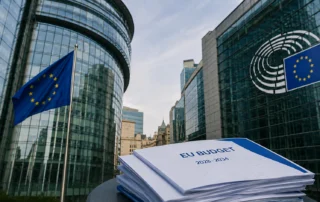
EAVI’s work in promoting Media Literacy in the next EU budget
11/06/2026 EAVI has been actively working in recent months to guarantee that the perspectives of the media literacy community and civil society organisations are represented in the debate on the priorities of the next budget. It is a long process, implying varied advocacy activities at EU level including attendance of Committee sessions and public hearings, meetings with Members of the European Parliament, other EU officials, drafting policy papers and amendments. To provide some context, the European Union relies on a multiannual financial framework (MFF), which is renewed every seven years. The European Commission [...]

What We Learned from 8 Conversations About AI and Media Literacy: What We Can All Do, According to the Experts
9/06/2026 How can media literacy strategies help safeguard citizens in an AI-driven information ecosystem? How have social media algorithms transformed the way information spreads? How can we ensure that AI aligns with human values and ethical principles? What does it mean to use AI responsibly? We explored these questions, among others, in the latest series of the EAVI Conversations podcast. In this article, we share some of the key lessons that emerged from our conversations with experts. From questioning the information we encounter online and reflecting critically on our use of AI, to [...]
8 Things Experts Want You to Know About AI and Media Literacy: EAVI’s Conversations 4
9/06/2026 In the latest series of the EAVI Conversations podcast, we explore why media and information literacy has become indispensable in an age shaped by algorithms and artificial intelligence. These conversations dive into the challenges AI poses for democracy, media freedom, education, and access to information. From the importance of explainability in AI and platform design, to the role of human agency in an increasingly automated environment, they examine what is needed to ensure that technological development serves the public interest, and how citizens, policymakers, educators, and technology developers can work towards [...]
The European Democracy Shield: an ambitious strategy?
27/05/2026 During her State of the Union speech in 2024, European Commission President Ursula Von der Leyen declared, “Our democracy is under attack. The rise in information manipulation and disinformation is dividing our societies. It is not only eroding trust in the truth – but also in democracy itself. This is why we urgently need the European Democracy Shield. We need more capacity to monitor and detect information manipulation and disinformation. So, we will set up a new European Centre for Democratic Resilience. This will bring together all the expertise and capacity across Member States [...]
Protecting Citizens in a changing media landscape: strengthening media literacy in the revision of the Audiovisual Media Services Directive
28/04/2026 The role of the Audiovisual Media Services Directive in promoting media literacy The Audiovisual Media Services Directive (AVMSD) came into force in 2010 and governs the EU-wide coordination of national legislation on all audiovisual media providers, namely traditional TV broadcasts and on-demand services. The goals behind an EU-wide coordination of audiovisual media include providing rules to shape technological developments, creating a level playing field for emerging audiovisual media, preserving cultural diversity, protecting children and consumers, safeguarding media pluralism, combating racial and religious hatred, and guaranteeing the independence of national media regulators. The adoption of the [...]
Media Policy in Focus: Unpacking the EU’s Competences
What the EU is doing? The European Union’s role in shaping media policy across its member states continues to evolve, balancing cultural diversity with economic interests in an increasingly digital world. Recent developments have highlighted the complexities and controversies surrounding the EU’s competencies in this area while also underscoring the growing importance of media literacy. The EU’s authority in media policy stems from various articles of the Treaty on the Functioning of the European Union (TFEU), as the treaties need to provide direct powers in audiovisual and media policy. This approach allows the [...]
Digital Services Act from a Media Literacy Perspective
22/11/2024 Digital Services Act and Media Literacy The Digital Services Act claims to be marking a new era of digital regulation in Europe, aiming to create a safe digital environment for users while keeping the platforms accountable. DSA: A new era As of August 25th, 2023, especially "very large online platforms" (VLOP) such as Google, Meta, X and YouTube, together with other digital services, must comply with the EU's legislative framework to continue to be present in Europe to create a safer digital experience for users through the Digital Services Act (DSA). DSA [...]
The European Media Freedom Act: A Crucial Step Taken Towards Media Literacy
26/01/2024 Independent media play a vital role in creating a public discourse, influencing public opinion, and ensuring accountability of those in positions of authority. It is considered as “a public watchdog” and “a key pillar of democracy. Therefore, the EU places significant emphasis on it and stands as a strong advocate for the existence of free and independent media on an international level. Simultaneously, there are growing concerns within the EU. The Commission has been closely monitoring these developments using tools such as the Rule of Law Report and the Media Pluralism Monitor. [...]

EAVI Joins 34 Organisations to Advocate for Better Copyright Reform for Education
The joint action was motivated by ambiguous wording used in the directive on Copyright in the Digital Single Market that is being discussed by a Parliamentary Committee formed by around 300 MEPs, to whom the letter is addressed.